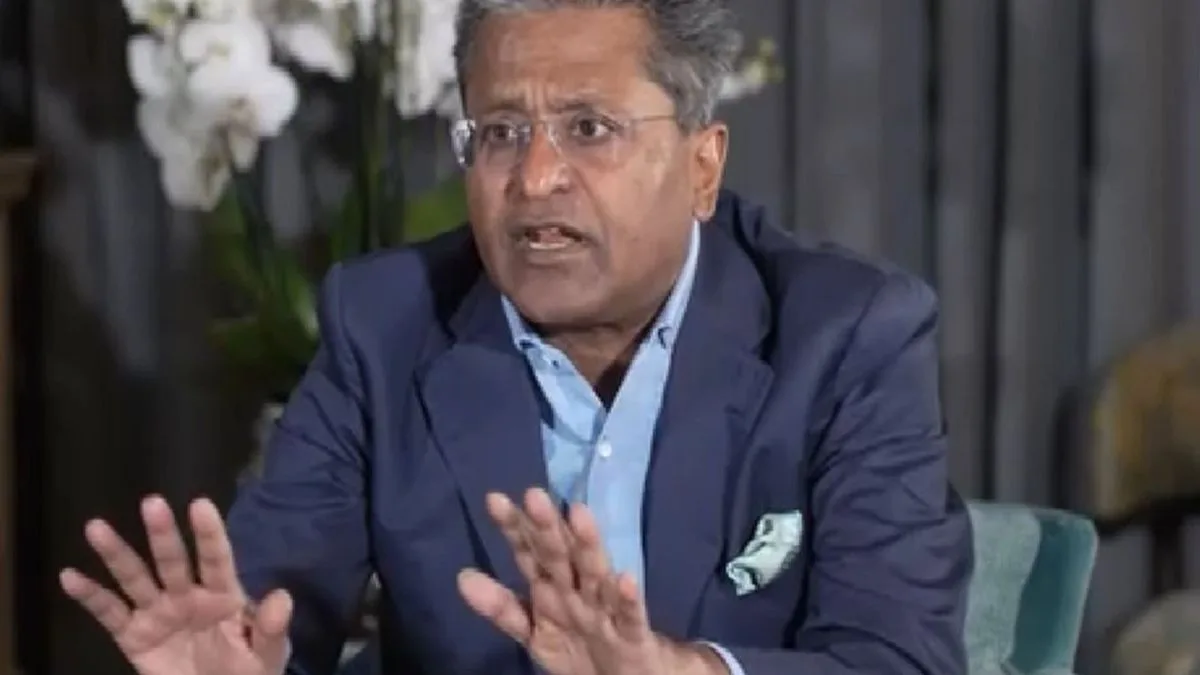
Balendra Shah (Balen) becalme Nepal’s prime minister after landslide election victory, riding wave of public anger against corruption and political instability. The 35-year-old rapper-turned-politician is also the first person from the Madhes region to hold the top executive post in the country. His party, the Rastriya Swatantra Party (RSP), secured a landslide victory in the March 5 parliamentary poll. He was sworn in on March 27, 2026.
What did Shah actually say in parliament?
Shah’s comments came during his first question-and-answer session in Parliament following the general elections held in February, while he was responding to a CPN-UML MP on issues related to the Nepal-India border dispute involving Lipulekh, Limpiyadhura, and Kalapani.
Advertisement
His statement had two parts that drew immediate attention.
First, on mutual encroachment: “You will be surprised to know a fact that I have learnt recently, only after becoming prime minister. India has not only encroached Nepali territory, but Nepal has also encroached Indian territory in many places,” the 35-year-old leader said.
Second, on involving third parties: Shah said Nepal had held diplomatic discussions not only with India and China but also with the United Kingdom regarding the long-standing border dispute. He argued that since the dispute originated during the era of British India, the UK should also take interest in helping address the issue. “We have held diplomatic discussions not only with India and China but also with the British government. This border dispute dates back to the period of British rule, so the UK should also play a role in resolving it,” Shah said.
He also confirmed that Nepal has officially sent a diplomatic note to India mentioning the issue of encroachment, including over Lipulekh, and that a response has been received. He added that both countries have agreed to take the help of historians, surveyors, and experts to resolve the dispute.
The long-running dispute: Background
The border disagreement over Lipulekh, Limpiyadhura, and Kalapani is not new. The India-Nepal border was established between Nepal and the British East India Company in the Sugauli Treaty of 1816. Under it, territories of Limpiyadhura, Lipulekh, Kalapani, and Susta are yet to be fully demarcated.
Nepal maintains that Limpiyadhura, Lipulekh, and Kalapani, located east of the Mahakali River, are part of its territory under the provisions of the Treaty of Sugauli. India’s position is the opposite. New Delhi has maintained that Kalapani, Lipulekh, and Limpiyadhura are not disputed lands but sovereign territories and part of the Uttarakhand state.
The dispute entered a fresh phase in 2020 when Nepal released a revised political map showing all three areas within its borders and later incorporated the map through a constitutional amendment. The current standoff over the Kailash Mansarovar Yatra route has again put the dispute back in focus. Earlier this month, while rejecting Nepal’s objection to the upcoming Kailash Mansarovar Yatra through the long-established Lipulekh Pass, India dismissed Kathmandu’s territorial claims over the region as an “unilateral artificial enlargement” that New Delhi finds “untenable.”
Reaction inside Nepal’s parliament
Shah’s remarks triggered swift pushback within his own parliament. Opposition lawmakers, including Basana Thapa of the Nepali Congress and Ramesh Malla of the Nepali Communist Party, objected to his comment and demanded the remarks be expunged from the parliamentary record. They said the PM should either provide evidence or withdraw his statement.
Border experts also weighed in. Buddhi Narayan Shrestha, a Nepal-India border expert, said Nepal has never encroached on Indian territory and added that in some regions, farmers from both sides have used each other’s land due to cross-border movement and missing boundary pillars.
This is a key distinction: informal land use by farmers and formal state-level encroachment are treated very differently under international border law.
Nepal’s Foreign Ministry steps in
Hours after the parliamentary session, Nepal’s Ministry of Foreign Affairs clarified that Prime Minister Balendra Shah’s remarks about Nepal having encroached on Indian land were made in reference to cross-border land occupation and the use of land across the Nepal-India border, rather than any territorial claim.
The ministry explained the technical context. The Nepal-India boundary in riverine areas was demarcated using the fixed boundary principle, resulting in situations where citizens of one country cultivate land or reside on territory that falls within the other country’s jurisdiction. “The issue mentioned by the prime minister in Parliament is essentially related to encroachment in the Dasgaja area [no-man’s land] and cross-border occupation,” the ministry said.
According to the ministry, the PM’s remarks were intended to refer to these cases of cross-border occupation, and not to alter Nepal’s longstanding position regarding the disputed territories of Kalapani, Lipulekh, and Limpiyadhura.
India’s response
The Ministry of External Affairs in India has so far not responded to the claims of “encroachment” or the proposal to involve the British in resolving the dispute. India has consistently maintained that the border issue should be handled bilaterally between New Delhi and Kathmandu, and has shown no inclination to bring in third parties.
What it means going forward
Shah came to power promising a break from Nepal’s traditional political culture. His parliament remarks, whether framed as candid or calculated, signal a shift in tone from Kathmandu. He has acknowledged mutual complications in the border situation, proposed a joint expert mechanism, and reopened the question of external involvement. None of these positions align neatly with how New Delhi has preferred to handle the dispute.
The Foreign Ministry’s clarification softened the immediate diplomatic pressure. But the broader questions Shah raised, about how the border is maintained, who should arbitrate longstanding ambiguity, and whether bilateral dialogue alone is sufficient, are unlikely to fade quickly.